ExecutionCivil, electrical, ceiling and furniture coordination
HandoverQuality checks and usable workplace delivery
Service Architecture
Design, planning, products and execution connected under one professional system.
Office interior services are most effective when they are treated as a single coordinated project system. A modern commercial workspace is not created by furniture selection alone. It needs layout planning, workflow study, civil coordination, electrical readiness, false ceiling integration, lighting balance, acoustic control, partition detailing, finish selection, furniture installation and final quality verification.
CND Engineering structures its office interior services around this complete requirement. The objective is to help businesses in Kolkata create workplaces that are practical, visually confident, easy to operate and suitable for long-term use. Each service is connected to the next so that the final office does not feel like a collection of separate vendor outputs.
For companies planning a new office, renovation or expansion, this approach reduces ambiguity. The project begins with understanding team size, department relationships, visitor flow, privacy requirements, meeting frequency, workstation density, storage needs, technology points and brand expectations. These inputs guide the design and execution plan before site work begins.
01
Office Interior Design
Reception, cabins, workstations, meeting rooms, collaboration zones and brand-led interiors.
02
Turnkey Office Fit-Out
Single-point coordination for design, BOQ, material, execution, supervision and handover.
Practical upgrade of existing offices with improved layout, infrastructure and finish quality.
Turnkey service flow for planning, design coordination, execution and handover.
Turnkey Scope
A complete office fit-out service must control both design quality and site execution.
Many office projects look good in concept but fail during execution because the drawings, services, furniture, lighting and site conditions are not coordinated. Our service model focuses on closing those gaps.
1
Requirement study
We begin by mapping departments, seat count, leadership spaces, storage, client movement, meeting usage, pantry requirements, IT infrastructure and future growth. This ensures the design responds to business operations rather than only decoration.
2
Concept and layout planning
The workspace layout defines the core logic of the project. It fixes circulation paths, workstation zones, cabins, meeting rooms, support areas, service points and expansion possibilities before detailed execution decisions are taken.
3
Material and finish coordination
Flooring, ceiling, wall finishes, laminates, glass, metal, paint, lighting and furniture finishes are selected with durability, maintenance, cost, brand tone and long-term usability in mind.
Core Services
Office interior design services for real business environments.
Office interior design has a direct impact on productivity, visitor perception and employee comfort. A structured office design service defines how people enter, move, meet, focus and collaborate inside the workplace. CND Engineering develops office layouts that balance practical execution with a premium commercial look.
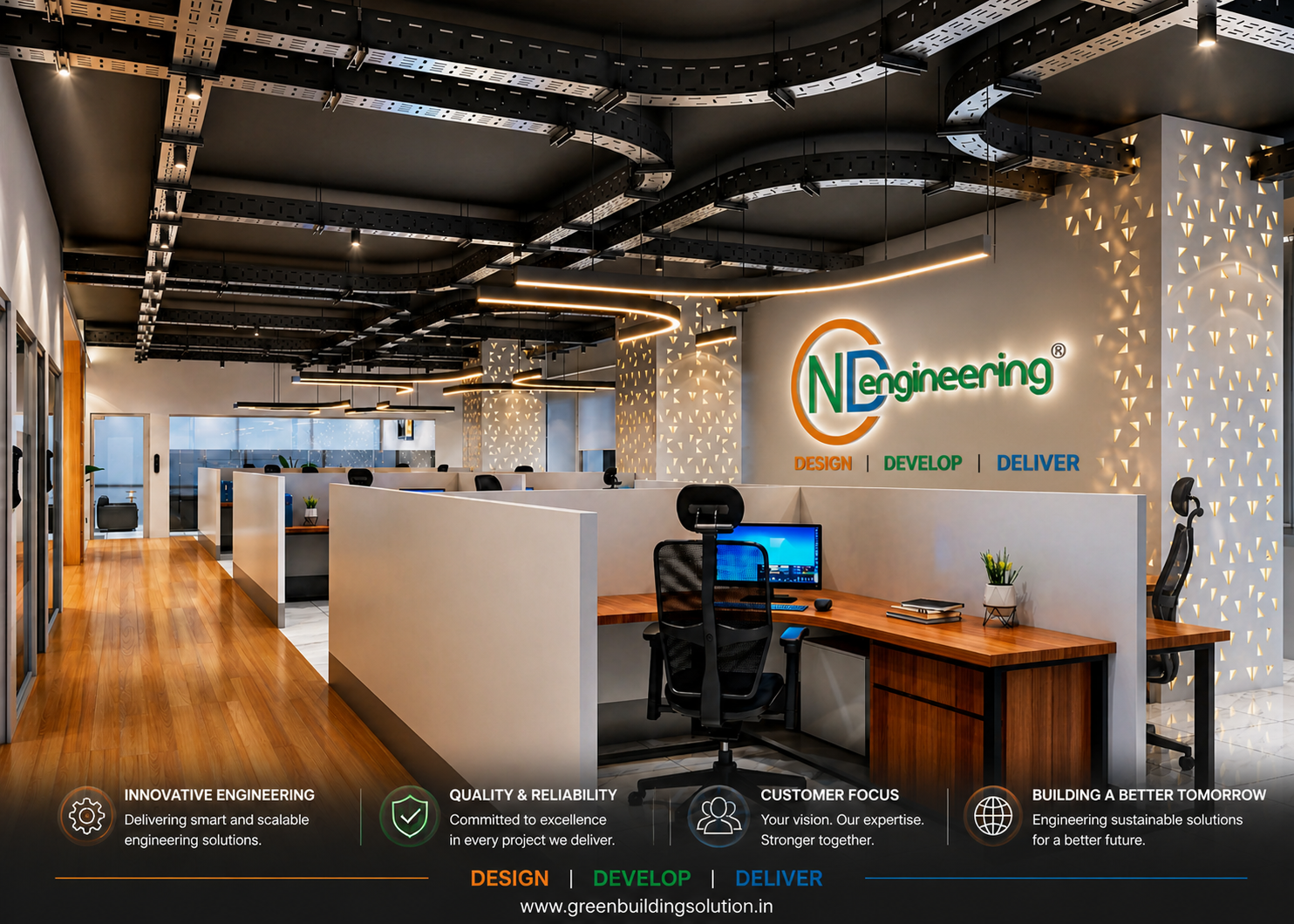
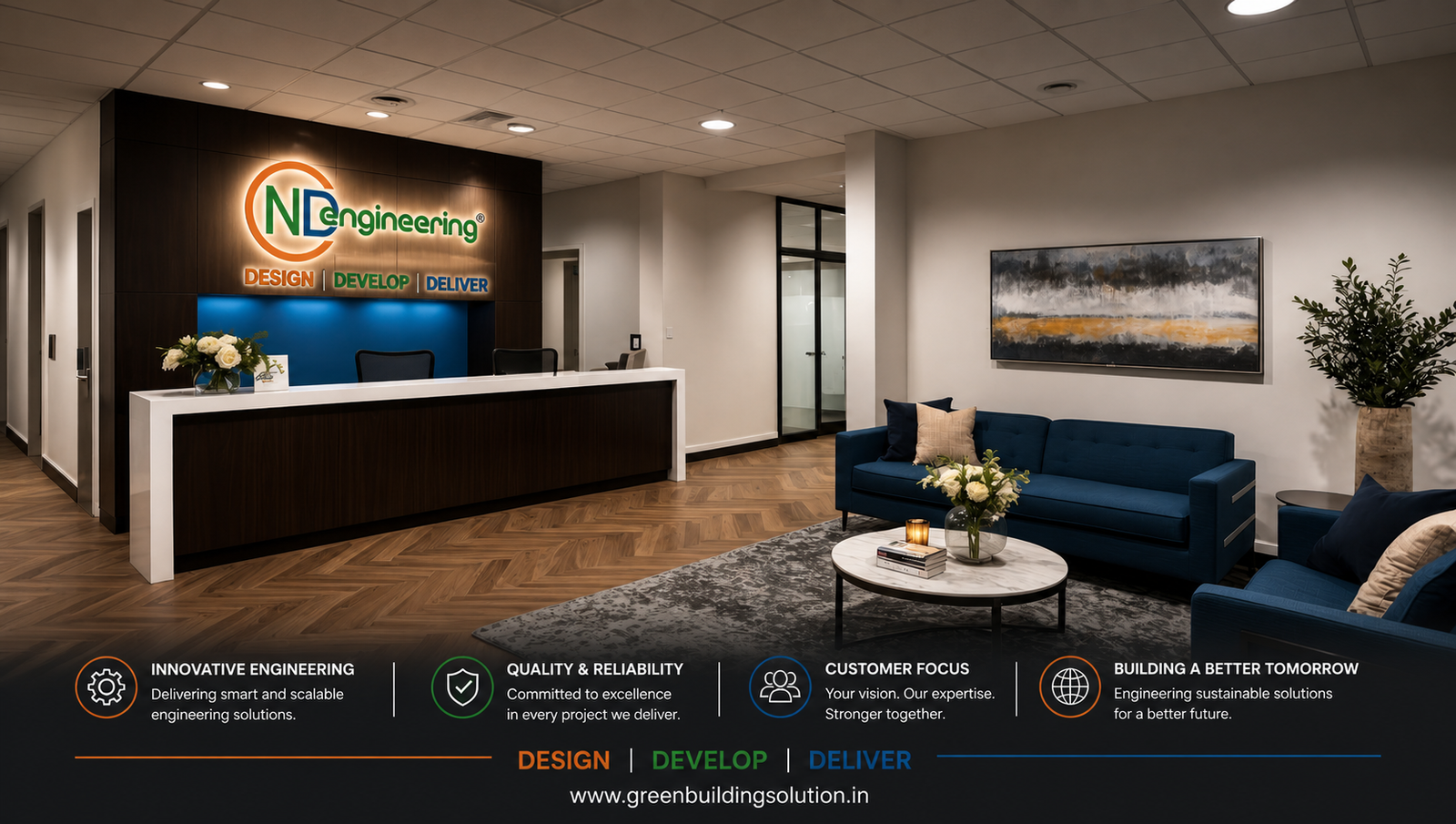
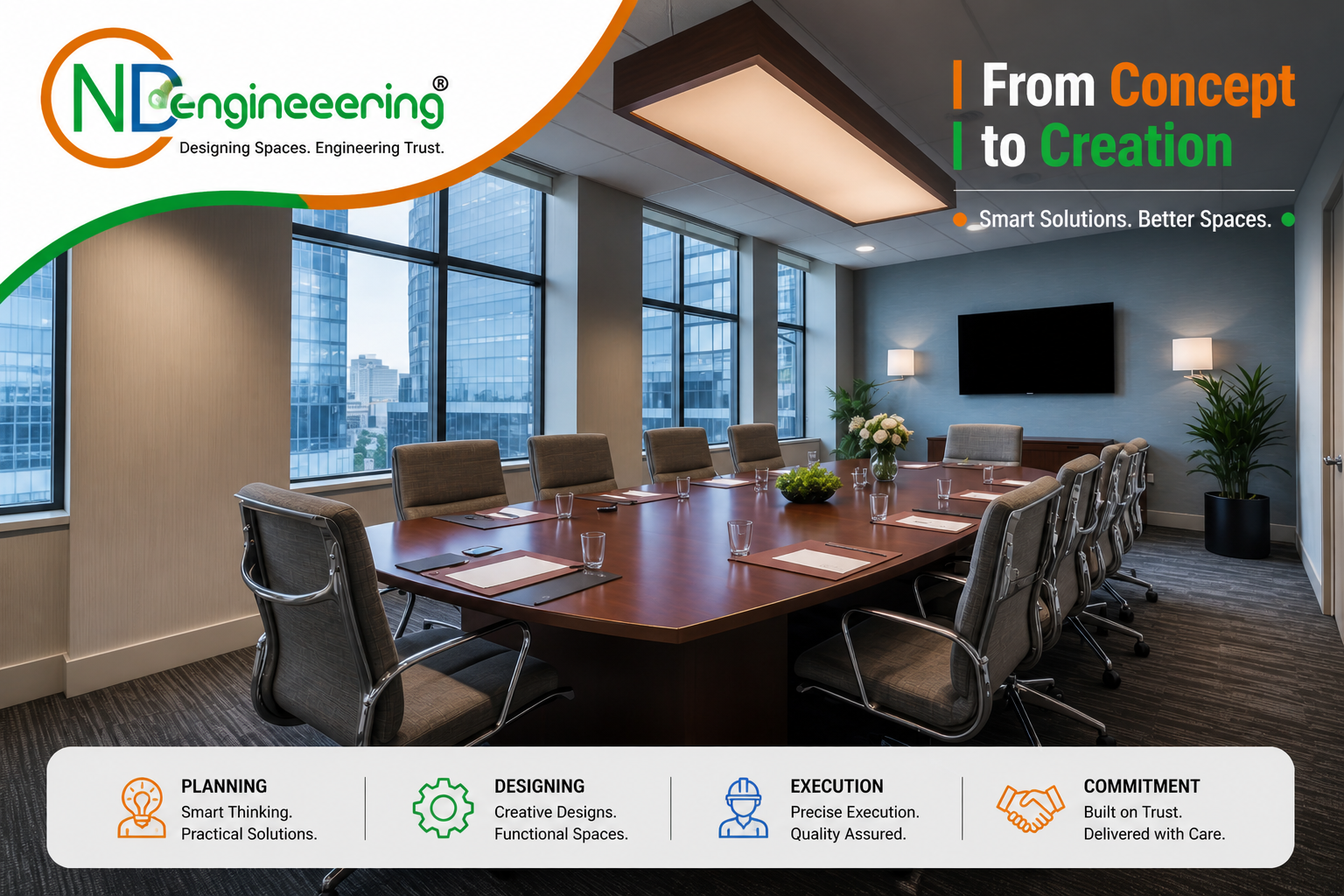
Reception areas are planned to create a strong first impression without wasting floor area. Executive cabins are designed with privacy, proportion, storage, lighting and meeting functionality. Workstation areas are planned for team communication, personal comfort, wiring access and clean cable management. Meeting rooms and conference rooms are coordinated with AV, lighting, acoustic treatment, glass partitions and furniture size.
The service also includes workplace zoning. Sales, accounts, design, operations, leadership, visitors and support teams should not be placed randomly. Proper zoning reduces disturbance, improves movement, supports confidentiality and makes the office easier to manage. For growing companies, planning also considers future expansion so that the layout does not become outdated too quickly.
Workspace planning connects seating, movement, privacy, meeting rooms and service points.
Reception Design
Front desk, waiting area, branding wall, visitor movement, lighting and first impression planning.
Cabin Design
Leadership cabins with privacy, executive furniture, storage, glass, acoustics and lighting.
Workstation Design
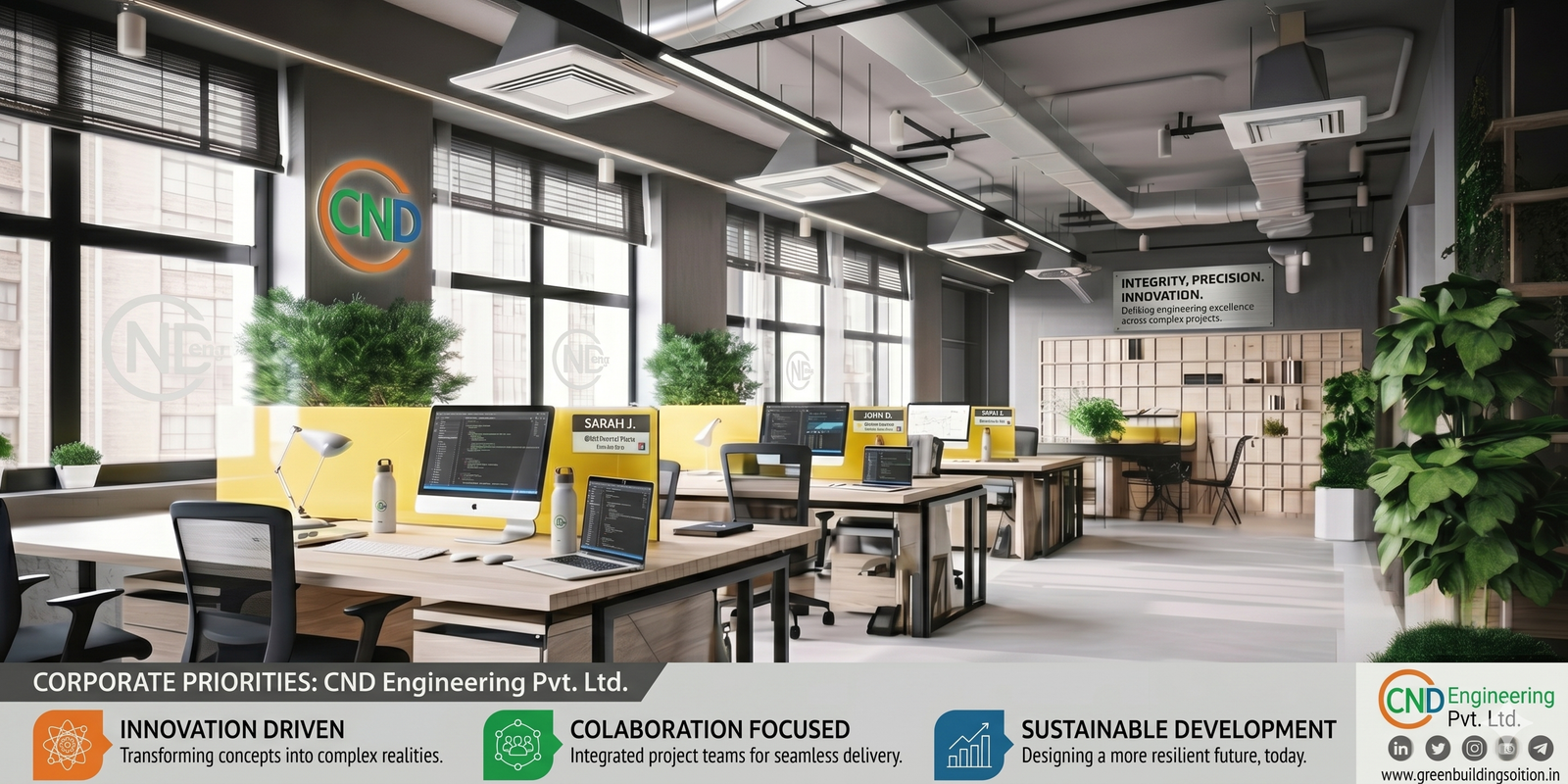
Modular workstations planned around ergonomics, team communication and cable access.
Meeting Room Design
Discussion rooms with AV readiness, seating proportion, acoustic control and clean finishes.
Execution Coordination
Civil, electrical, furniture, partitions, ceiling and lighting must work together.
Office interiors require careful coordination between visible finishes and hidden services. Without this coordination, the project may face late changes, mismatched points, awkward furniture placement and avoidable rework.
Civil and Electrical Work
Partition lines, wall preparation, flooring base, ceiling supports, wiring, power points, DB coordination, data routing, lighting circuits and final testing.
Partitions and Acoustic Planning
Glass partitions, frosted privacy, meeting room separation, cabin enclosure, acoustic panels and sound control for productive work environments.
False Ceiling and Lighting
Gypsum, grid and acoustic ceilings integrated with lighting, HVAC access, fire safety, services and visual proportion.
Execution coordination reduces site conflict between services, furniture and finishes.
Office renovation services for existing commercial workplaces.
Office renovation is different from a new office fit-out because existing conditions must be studied before changes are proposed. Old wiring, damaged ceiling areas, outdated lighting, poor furniture placement, storage problems and inefficient team zones can affect daily work. A renovation plan must improve function while controlling disruption.
CND Engineering supports commercial office renovation by reviewing the present layout, identifying pain points and creating a phased improvement plan. Depending on the project, renovation may include repainting, flooring replacement, false ceiling correction, lighting upgrade, workstation reconfiguration, cabin redesign, meeting room improvement, pantry modification, glass partition installation, electrical rewiring and brand refresh.
For working offices, phasing is important. Work can be divided by floor, department, zone or schedule so that essential business functions continue with minimal disturbance. Safety, dust control, power isolation, material movement and daily site cleanliness are also considered during planning.
Layout correction for better space utilization
Lighting and ceiling improvement
Old furniture replacement or reconfiguration
Glass partition and cabin upgrade
Electrical and data point relocation
Reception and meeting room modernization
Branding wall and finish refresh
Phased execution to reduce disruption
Project Process
A clear process helps the client understand cost, time and final quality.
SEO performance improves when visitors find complete information, but conversion improves when the service process is also easy to understand. This page therefore explains the practical workflow behind the service.
Consultation and requirement collection: The team studies business goals, headcount, department relationships, work style, budget range and expected project timeline.
Site review and measurement: Existing floor dimensions, columns, services, ceiling height, windows, electrical condition and site limitations are checked.
Layout and design development: Seating, cabins, meeting rooms, reception, pantry, storage, circulation and service points are planned into an execution-ready structure.
BOQ and cost planning: Material, quantity, finishes, furniture, civil work, electrical work, ceiling and lighting scopes are organized for better cost visibility.
Procurement and execution: Approved materials and systems are coordinated with civil, electrical, furniture, partition, ceiling and finishing teams.
Quality check and final handover: Alignment, finish, lighting, wiring, furniture placement, access, safety and snag correction are reviewed before handover.
Why CND Engineering
Why choose CND Engineering for office interior services in Kolkata?
Businesses choose CND Engineering because the company combines office interior design knowledge with turnkey execution capability. This is useful for organizations that do not want to manage separate designers, contractors, furniture vendors, electricians, ceiling workers and finishing teams independently.
The approach is practical. The design must look professional, but it must also be buildable, maintainable and aligned with the client’s budget. A premium office is not only about expensive finishes. It is about correct planning, balanced proportions, service coordination, lighting comfort, acoustic performance, durable materials, clean detailing and reliable execution.
For Kolkata-based companies, local site management, vendor coordination, material availability and timely decision-making are especially important. CND Engineering’s service model focuses on helping clients move from idea to usable workplace with fewer coordination gaps.
Renovation and turnkey fit-out services for practical workplace transformation.
Single-point responsibility
One coordinated team reduces confusion between design, procurement, civil work, electrical services, furniture and finishing.
Business-first design
The layout and interiors are planned around team workflow, productivity, brand image and day-to-day operational comfort.
Execution clarity
Structured BOQ, material coordination, site sequencing and quality checking help improve time control and final finish quality.
Service Coverage
Complete office interior service categories.
Office interior design in Kolkata
Turnkey workspace fit-out
Commercial office fit-out execution
Workspace planning and seating layout
Departmental zoning and circulation planning
Reception and waiting area design
Executive cabin and leadership space design
Workstation design and modular furniture
Meeting room and conference room interiors
Glass partition systems and privacy films
Acoustic panels and sound-balanced planning
False ceiling and integrated lighting
Civil and electrical work coordination
Office renovation and modernization
Material selection and finish coordination
Project management and final handover
FAQ
Frequently asked questions about office interior services.
These answers help visitors understand the service scope before making an enquiry.
What office interior services does CND Engineering provide in Kolkata?
CND Engineering Pvt Ltd provides office interior design, turnkey office fit-out, workspace planning, office renovation, civil and electrical coordination, modular furniture, glass partitions, acoustic solutions, false ceiling, lighting, project supervision and final handover support for commercial workplaces in Kolkata.
Why should a company choose turnkey office interior services?
Turnkey office interior services reduce coordination problems because planning, design, material selection, civil work, electrical work, furniture, finishing and handover are managed through one structured responsibility system.
Do office interior services include civil and electrical work?
Yes. A professional turnkey office interior service normally includes civil coordination, partitions, flooring base, ceiling integration, wiring, lighting, power points, data routing, DB coordination and testing before handover.
Can office renovation be executed without fully stopping business operations?
Yes. Office renovation can often be phased by department, floor, zone or time window so that business disruption is reduced while electrical, ceiling, furniture and finishing upgrades are completed safely.
How does workspace planning improve office productivity?
Workspace planning improves productivity by aligning seating, department zoning, circulation, privacy, meeting access, storage and future expansion with actual work patterns instead of only visual appearance.
Which businesses need commercial office interior services in Kolkata?
Corporate offices, IT companies, startups, consulting firms, finance teams, sales offices, coworking spaces, training centers, back offices and branch offices can benefit from structured commercial office interior services.
Plan your office interior project with a coordinated turnkey team.
CND Engineering Pvt Ltd helps businesses in Kolkata design, renovate and execute commercial workplaces with practical planning, reliable service coordination and professional final handover.