How to Plan an Efficient Office Layout
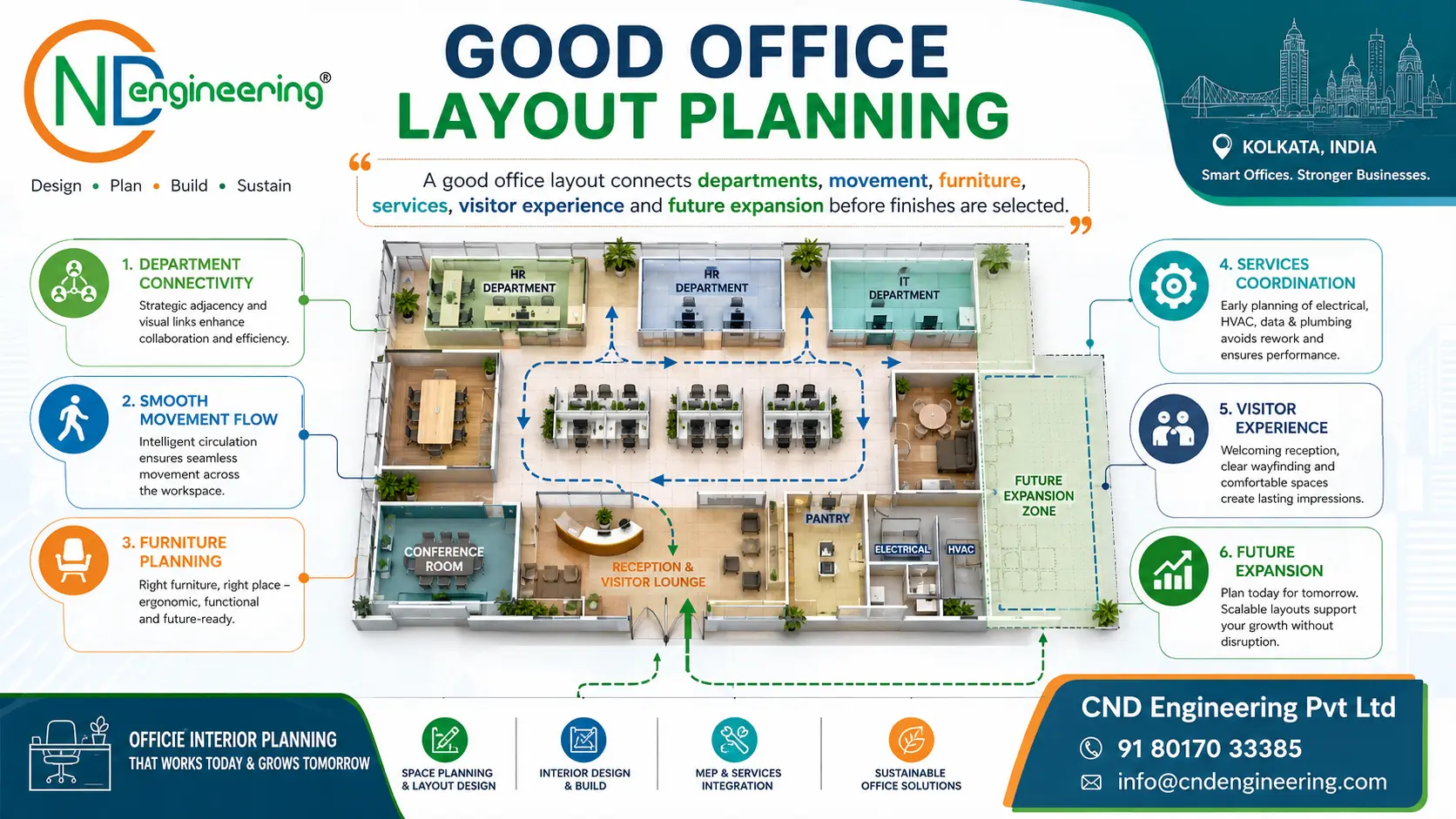
Efficient office layout planning begins with people and workflow. Before selecting furniture, colour, ceiling patterns or wall finishes, a business should understand how teams interact, how visitors enter, where departments should sit, how meetings happen, where storage is required, and which areas need privacy. A visually attractive office may still fail if the daily movement, seating density, power points, lighting and acoustic comfort are not planned correctly.
For Kolkata offices, space efficiency is often a major requirement because many commercial premises must balance cost, capacity and presentation. The layout should provide enough workstations without making the space feel congested. Passage width, chair movement, access to storage, printer location, pantry approach, meeting room entry and reception flow should be checked carefully. A compact office can still feel premium when the plan is disciplined and the furniture dimensions are realistic.
Office layout planning should also consider future growth. A company may need additional staff, a larger meeting room, more storage, hybrid workstations or new technology within one or two years. Modular planning helps the office adapt without heavy reconstruction. Standard workstation sizes, movable storage, flexible meeting spaces and carefully placed electrical routes can reduce future disruption.
Another important part of layout planning is service coordination. Workstation power, data points, Wi-Fi access points, display connections, switchboards, lighting circuits and AC controls must match the final seating plan. If electrical planning is done after furniture installation, the site may need visible cables or rework. That is why CND Engineering treats workspace planning, civil work, electrical work and furniture planning as connected decisions in a turnkey office interior project.


